






1. 引言
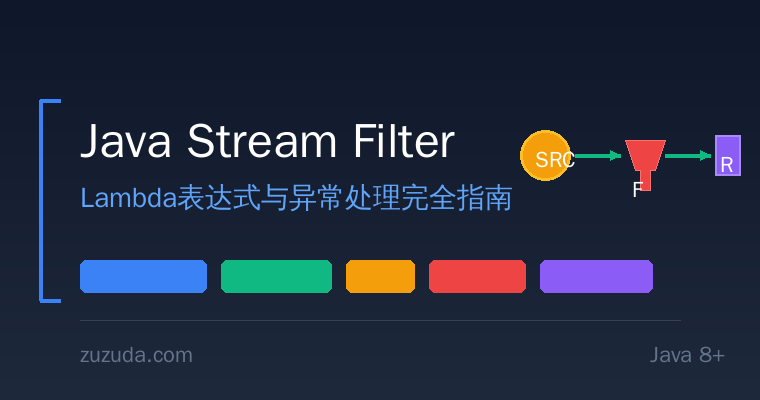
自Java 8引入Stream API以来,函数式编程范式已成为Java开发者的标配工具。
filter()作为Stream最核心的中间操作之一,配合Lambda表达式能够以声明式方式优雅地处理集合筛选逻辑。本文将从基础用法到高阶技巧,全面解析
Stream.filter()的使用方法,并重点解决受检异常(Checked Exception)在Lambda中的处理难题。2. filter() 方法基础
2.1 方法签名与Predicate接口
filter()是Stream接口的中间操作,接收一个Predicate函数式接口:Stream<T> filter(Predicate<? super T> predicate)Predicate核心逻辑:对Stream中的每个元素执行测试,返回
true保留,false丢弃。2.2 实战模型搭建
我们构建一个会员积分系统作为演示场景:
public class Customer {
    private String name;
    private int points;
    private String profilePhotoUrl;
    private LocalDateTime lastActiveTime;

    // 构造方法、Getter/Setter省略

    // 业务方法:判断积分是否超过100
    public boolean hasOverHundredPoints() {
        return this.points > 100;
    }

    // 受检异常方法:验证头像URL可访问性
    public boolean hasValidProfilePhoto() throws IOException {
        URL url = new URL(this.profilePhotoUrl);
        HttpURLConnection conn = (HttpURLConnection) url.openConnection();
        return conn.getResponseCode() == HttpURLConnection.HTTP_OK;
    }
}
初始化测试数据:
List<Customer> customers = Arrays.asList(
    new Customer("张三", 15, "https://example.com/a.jpg"),
    new Customer("李四", 200, "https://example.com/b.jpg"),
    new Customer("王五", 150, "invalid-url"),
    new Customer("赵六", 1, null)
);
3. 核心过滤模式
3.1 Lambda表达式过滤
筛选积分大于100的高价值用户:
List<Customer> vipCustomers = customers.stream()
    .filter(c -> c.getPoints() > 100)
    .collect(Collectors.toList());
3.2 方法引用优化
当筛选逻辑已封装在实体类中时,使用方法引用提升可读性:
List<Customer> vipCustomers = customers.stream()
    .filter(Customer::hasOverHundredPoints)
.collect(Collectors.toList());对比分析:
-
Lambda适合简单、临时的筛选逻辑
-
方法引用适合复用已有业务方法,代码更简洁
3.3 多条件复合过滤
利用Predicate的
and()/or()方法或逻辑运算符实现复杂筛选:// 方式1:逻辑运算符(适合简单条件)
List<Customer> result = customers.stream()
.filter(c -> c.getPoints() > 100 && c.getName().startsWith("李"))
.collect(Collectors.toList());
// 方式2:Predicate组合(适合复杂/可复用条件)
Predicate<Customer> isVip = c -> c.getPoints() > 100;
Predicate<Customer> isRecent = c -> c.getLastActiveTime()
.isAfter(LocalDateTime.now().minusDays(7));
List<Customer> activeVips = customers.stream()
.filter(isVip.and(isRecent))
.collect(Collectors.toList());4. 异常处理进阶方案
Stream API的函数式接口不声明受检异常,直接在Lambda中抛出
IOException等会导致编译错误:// ❌ 编译错误:Incompatible thrown types IOException
customers.stream()
.filter(Customer::hasValidProfilePhoto)
.collect(Collectors.toList());4.1 方案一:传统Try-Catch包装
在Lambda内部捕获并处理异常,适用于需要即时处理的场景:
List<Customer> validPhotoCustomers = customers.stream()
    .filter(c -> {
        try {
            return c.hasValidProfilePhoto();
        } catch (IOException e) {
            // 记录日志或返回默认值
            log.warn("头像验证失败: {}", c.getName(), e);
            return false; // 异常时排除该元素
        }
    })
.collect(Collectors.toList());缺点:代码冗长,破坏Stream链式阅读的流畅性。
4.2 方案二:ThrowingFunction库
ThrowingFunction开源库提供了支持异常抛出的函数式接口包装器。
Maven依赖:
<dependency>
    <groupId>com.pivovarit</groupId>
    <artifactId>throwing-function</artifactId>
    <version>1.5.1</version>
</dependency>使用示例:
import com.pivovarit.function.ThrowingPredicate;

List<Customer> result = customers.stream()
    .filter(ThrowingPredicate.unchecked(Customer::hasValidProfilePhoto))
.collect(Collectors.toList());原理:将受检异常转换为
RuntimeException,保持Stream链的简洁性。4.3 方案三:自定义通用Wrapper(推荐)
不引入第三方库时,可封装通用工具类:
@FunctionalInterface
public interface ThrowingPredicate<T, E extends Exception> {
    boolean test(T t) throws E;

    static <T> Predicate<T> unchecked(ThrowingPredicate<T, Exception> predicate) {
        return t -> {
            try {
                return predicate.test(t);
            } catch (Exception e) {
                throw new RuntimeException(e);
            }
        };
    }
}

// 使用
customers.stream()
    .filter(ThrowingPredicate.unchecked(Customer::hasValidProfilePhoto))
    .collect(Collectors.toList());
5. 性能优化与最佳实践
5.1 过滤顺序优化
将低成本、高筛除率的过滤条件前置,减少后续操作的数据量:
// ✅ 先过滤再映射,减少map操作次数
list.stream()
    .filter(cheapCondition)  // 快速排除大量数据
    .filter(expensiveCondition) // 复杂校验
    .map(transform)
    .collect(Collectors.toList());
5.2 并行流注意事项
数据量较小(通常<10,000)时,并行流的开销可能超过收益:
// 大数据集且无状态操作时考虑使用
List<Customer> result = customers.parallelStream()
    .filter(c -> c.getPoints() > 100)
    .collect(Collectors.toList());
5.3 空值安全处理
避免在Predicate中直接调用可能null对象的方法:
// ✅ 使用Objects.nonNull或Optional防御式编程
customers.stream()
    .filter(Objects::nonNull)  // 先排除null元素
    .filter(c -> Objects.nonNull(c.getProfilePhotoUrl()))
    .filter(c -> c.getProfilePhotoUrl().startsWith("https"))
    .collect(Collectors.toList());
6. 总结
| 场景 | 推荐方案 |
|---|---|
| 简单条件过滤 | Lambda表达式 (c -> c.getPoints() > 100) |
| 复用已有方法 | 方法引用 (Customer::hasOverHundredPoints) |
| 多条件组合 | Predicate.and/or组合 |
| 需抛出受检异常 | Try-Catch包装或ThrowingFunction库 |
| 高频通用异常处理 | 自定义通用Wrapper工具类 |
filter()作为Stream API的"守门员",合理使用能显著提升代码的声明性和可维护性。对于异常处理,建议在团队内统一规范,平衡代码简洁性与异常透明度。